It reminded me of the Crusader era. The arched table in the chambers of a young woman in a fortress whose leaders dream of conquering the world. I watch a lot of historical films. Very beautiful and thoughtful work!
This reminded me of the Crusader era)) the arched table in the chambers of a young woman in a fortress whose leaders dream of conquering the world. I watch a lot of historical films. Very beautiful and thoughtful work!
Arina Bogachyova, I really appreciate your opinion, thank you very much!
The skull cult during the Neanderthal period: drinking wine from a skull is a true allegory of power, intelligence, victory, and everything in between.
If you're serious about doing this, it's a serious ritual.
The cult of the skull during the Neanderthal period: drinking wine from a skull is a true allegory of power, intelligence, victory, and everything in between.
If you're serious, it's done according to a serious ritual.
Source: MGIMO lectures (religious studies).
S V, wow! We covered this topic a little differently in our Art History course.
Troitsky Andrey, it's true, it depends on the person. Some prefer opera, while others are content with ditties.
Tatyana Karachkova, in opera, soap bubbles are blown, while in ditties, life's themes are conveyed...) And there are plenty of singing voices, regardless of the place where they are performed...
S V, oh wow! We covered this topic a little differently in our Art History course.
Tatyana Karachkova, it all started with the cave bear—as a symbol of power. then the horns of the horned animals then the skull then the Neolithic Revolution then the necropolises.
Tatyana Karachkova, ritual fires with skulls and bones (also ritual). A very serious find – Peking Man. Sinanthropus. Also known as Chinanthropus in Russian.
Fire was first used there.
Then Africa.
To this day, in some places in Australia, there's a skull cult.
Tatyana Karachkova, It all started with the cave bear—as a symbol of power. Then the horns of the horned bears Then the skull Then the Neolithic Revolution Then necropolises.
To this day.
And what did they tell you?
S V,
Tatyana Karachkova, It all started with the cave bear—as a symbol of power. Then the horns of the horned bears Then the skull Then the Neolithic Revolution Then necropolises.
To this day.
And what did they tell you?
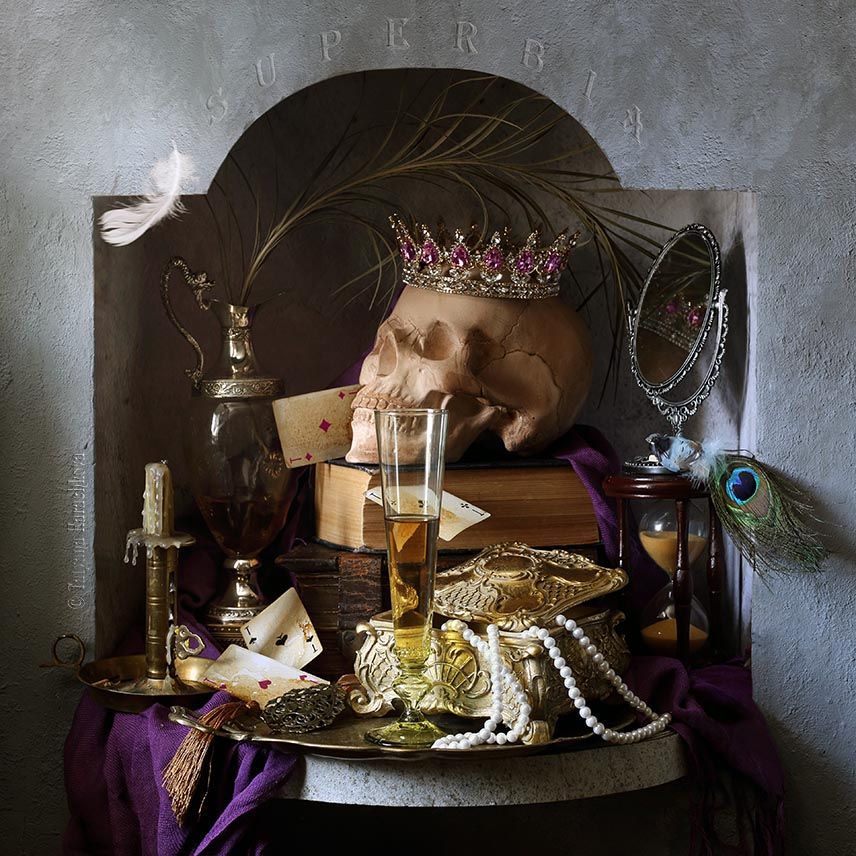
S V, Vanitas (from the Latin vanitas – "vanity, vanity, frailty") is a genre of allegorical still life that originated in the Baroque era and became particularly popular in the Netherlands, Flanders, and France and Spain in the 16th and 17th centuries. Its main purpose is to remind the viewer of the transience of life, the inevitability of death, and the illusory nature of earthly goods.
Tatyana Karachkova, in opera, soap bubbles are blown, and in ditties, life's motives are promoted...) And there are many singing voices, regardless of the place where they sound...
Troitsky Andrey, well, well... why should I listen to an aria from "The Magic Flute" when I remembered the ditty: "The sweetheart stands at the gate, her mouth wide open, and no one can tell where the gate is and where the mouth is" )))))) lifelike....
Troitsky Andrey, well, well... why should I listen to an aria from "The Magic Flute" when I remembered the ditty: "The sweetheart stands at the gate, her mouth wide open, and no one can tell where the gate is and where the mouth is" )))))) so true....
Tatyana Karachkova, and when opera divas open their mouths wide, do you understand the recitative coming from them, without a libretto or any other supporting literature...?)
Troitsky Andrey, well, well... why should I listen to the aria from "The Magic Flute" when I remembered the ditty: "The sweetheart stands at the gate, her mouth wide open, and no one can tell where the gate is and where the mouth is" )))))) so true to life....
Tatyana Karachkova, and when opera divas open their mouths wide, do you understand the recitative coming from them, without a libretto or any other supporting literature...?)
Troitsky Andrey, 1) you should read the program before the performance if you're listening for the first time. 2) In many operas, the music is simply heard, if you have an ear, of course. 3) In modern theaters, including in opera productions, there is a technology called running captions. This is text accompaniment that is displayed on a screen (often projected onto the stage) and scrolls so that the audience can follow the plot and understand the text of the arias, especially if the opera is in the original language.
Troitsky Andrey, 1) You should read the program before the performance if you're listening for the first time. 2) Many operas simply have music you can hear, if you have an ear, of course. 3) Modern theaters use this technology, including in opera productions, called running captions. This is text accompaniment that appears on a screen (often projected onto the stage) and scrolls so that the audience can follow the plot and understand the text of the arias, especially if the opera is in the original language.
Tatyana Karachkova, It would be good if the captions also explained the various symbols appearing on stage to the audience... Say, a skull appears on stage... and then everything becomes clear and understandable to everyone: why it's there and why...) In the opera "Hamlet," for example... why this Yorick was poor...)
Tatyana Karachkova, it would be good if the captions also explained to the audience the various symbols appearing on stage... Say, a skull appeared on stage... and then everything would become clear and understandable to everyone, why it was there and why...) in the opera "Hamlet", for example... why this Yorick was poor...)
Troitsky Andrey, well, why complicate everything - start with the simple, for example, the symphonic fairy tale "Peter and the Wolf"
Troitsky Andrey, why complicate things? Start with something simple, like the symphonic fairy tale "Peter and the Wolf"
Tatyana Karachkova, do you think I can handle it? I'm trembling all over from the responsibility of perceiving it correctly... where am I, and where is Petya, the symphonic Petya, and not just one...)
Tatyana Karachkova, do you think I can handle it...? I'm kind of trembling all over from the responsibility of perceiving it correctly... where am I, and where is Petya the symphonic, and not just one...)
Troitsky Andrey, well then don't bother, otherwise ICD-10 might be added to the tremors after looking at photos of skulls
S V, Vanitas (from the Latin vanitas – "vanity, vanity, frailty") is a genre of allegorical still life that originated in the Baroque era and became particularly popular in the Netherlands, Flanders, and also in France and Spain in the 16th and 17th centuries. Its main purpose is to remind the viewer of the transience of life, the inevitability of death, and the illusory nature of earthly goods.
Tatyana Karachkova, vanity is a mortal sin! vanity is human frailty frailty is the Brahmanas and Upanishads.


If you're serious about doing this, it's a serious ritual.
Source: MGIMO lectures (religious studies).
and the natural light here, it seems, doesn't suit the skull at all...)
there it is! That's the place
And there are plenty of singing voices, regardless of the place where they are performed...
it all started with the cave bear—as a symbol of power.
then the horns of the horned animals
then the skull
then the Neolithic Revolution
then the necropolises.
to this day.
And what did they tell you?
ritual fires with skulls and bones (also ritual).
A very serious find – Peking Man.
Sinanthropus.
Also known as Chinanthropus in Russian.
Fire was first used there.
Then Africa.
To this day, in some places in Australia, there's a skull cult.
It's all very religious!
S V, Vanitas (from the Latin vanitas – "vanity, vanity, frailty") is a genre of allegorical still life that originated in the Baroque era and became particularly popular in the Netherlands, Flanders, and France and Spain in the 16th and 17th centuries. Its main purpose is to remind the viewer of the transience of life, the inevitability of death, and the illusory nature of earthly goods.
https://ru.wikipedia.org/wiki/Файл:W._A._Mozart_-_Die_Zauberflöte_-_18._Der_Hölle_Rache_kocht_in_meinem_Herzen_(Ferenc_Fricsay,_1953).ogg
I think I heard this "a-ha-ha-ha-ha-ha-ha" in "The 5th Element"... that's the movie...)
ps... do you listen to the original versions of arias?
vanity is a mortal sin!
vanity is human frailty
frailty is the Brahmanas and Upanishads.
how can all this be called "vanitas"?
I just listen to lectures.
In the public domain.
What is your view on the varna caste structure of social groups?
Personally, I would first of all abolish anything that interferes with the class structure.
And that's it: monarchy!
Monarchy—a God-given structure—is an argument in case of dispute.
Why is there no popular assembly, and instead, just one representative speaking?
One more question, while we're on the subject: what do you think of Byzantium as a form of government?
Another question: why do people with a lot of money ask questions that are ranked very low?
It's a real trend.