Pavel Nagin, Well, yes, of course, this isn't an educational picture for younger children like "Find where the hares are hiding," "How many squares (circles, triangles) do you see in the picture?", "What animals are hiding in the forest?", and so on and so forth... ))
Egrel, that's not the point, it's just a regular terrain scan.
Pavel Nagin, What would have to be done to make it more than just a regular terrain scan? Scan puddles, walls, car hoods... or something else?.. You have your preferences, we have ours. ))
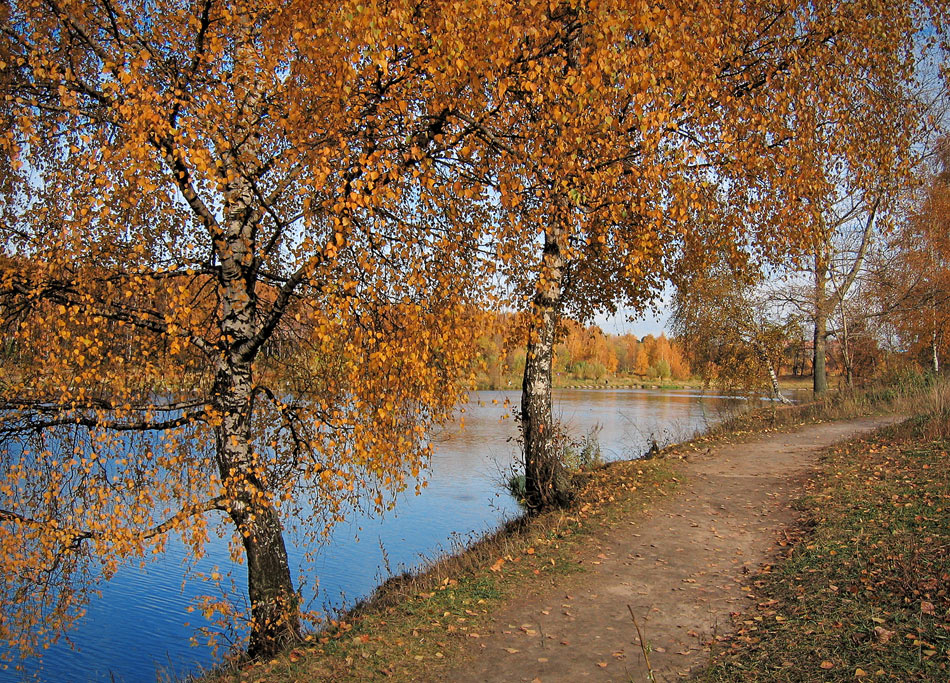
Pavel Nagin, I was attracted by the view... I like painting, I was looking for a more picturesque place, and I liked that. Others like puzzles, they seek them out, but I don't bother with them, although I consider most of the works in the "Un Certain Regard" section to be garbage, some of which are even of terrible quality. But I don't interfere with the authors of those "masterpieces" with my "view"... And I consider it unethical to impose my tastes on anyone, like...
. I like painting; I was looking for a more picturesque place.
Egrel, Good painting stems not from the "beauty" of the subject, but from the combination of techniques and methods by which the subject is transformed on canvas into an image, into a form. This is precisely what they're trying to explain to you: that a photographer shouldn't look for a "picturesque" reference, but rather be able to create a beautiful and interesting picture. And for this, you don't need a "picturesque" reference, but imagination and a sharp mind. ***
Others like puzzles; they seek them out, but I don't bother them...
It's not the puzzles they like. It's the "poetic language" with which they sculpt their photographs.
It's not the puzzles they like. It's the "poetic language" with which they sculpt their photographs.
Andrew Kud, Honestly, I don't often hear "poetic language" in them... And those works that truly have a twist and even sometimes hear "poetic language," I'm recommending... ) And from the "specialists," I've observed a categorical rejection of the "picturesque" quality of works of a different kind. Sometimes it seems to me that the term "picturesque" is a swear word for them.
Egrel, And it seems like thinking isn't interesting either :)
Mira Golub, What does this have to do with the topic under discussion or with the work? Did I personally humiliate even one author, as easily as you did?
It's funny that this particular remark of yours received approval, the only upvote so far... And I, mistakenly, thought upvotes were given for a meaningful comment on the work or a discussion about photography. I've long noticed this phenomenon of upvoting derogatory comments specifically directed at fellow club members... I wonder who liked this remark of yours?
Sometimes it seems to me that the term "painterly" is a dirty word for them.
Egrel, This is because they know that for photography to invade the realm of painting is foolish and futile. In the realm of painting, photography will always be beaten. And beaten very painfully.
Photography doesn't have the same powerful means of sculpting pictorial form that a painter has. Therefore, looking at "painterly" photography, I always feel, pardon me, disgust: like someone who has gotten into the wrong boat. But photography has a very small field where it can give painting and other legitimate arts a run for their money. It is in this tiny field of possibilities that photographers who know this secret seek their place.
Egrel, This is because they know that for photography to encroach on the field of painting is foolish and futile. In the field of painting, photography will always be beaten. And beaten very painfully.
Photography lacks the same powerful means of sculpting pictorial form that a painter has. Therefore, looking at "painterly" photography, I always feel, pardon me, disgust: like someone who has gotten "in the wrong sleigh." But photography has a very small field where it can give painting and other legitimate arts a run for their money. It's in this tiny field of possibilities that photographers who know this secret seek their place.
Andrew Kud, I feel exactly the same disgust and even bewilderment when I see primitive mobile photography, accompanied by enthusiastic exclamations. But I don't pry, because to each their own "field," and their own... disgust.
After all, to each their own "field," and their own...disgust.
Egrel, That's not true. No matter how you look at it, there's an established notion in modern culture about what is "good" and what is "bad."
Ultimately, there's a purely rational explanation for all this, which is very difficult to argue with. In other words, reasoning, reduced to an axiom, about why something should be considered good or bad. You could, of course, dismiss all these arguments and try growing potatoes in flowerpots on the windowsill of a city apartment, but that's a bit too eccentric.
Egrel, That's not true. Whatever one may say, there is an established notion in modern culture about what is "good" and what is "bad."
Ultimately, there is a purely rational explanation for all this, which is very difficult to argue with. In other words, reasoning, taken to the level of axiom, about why something should be considered good or bad. You could, of course, dismiss all these arguments and try growing potatoes in flowerpots on the windowsill of a city apartment, but that's a bit too eccentric.
Andrew Kud, Well, established ideas constantly change over time, I think, but in my opinion (as a housewife, by the standards of this site), a photograph should, first and foremost, provide aesthetic pleasure, evoke emotion, and have some meaning. Of course, you can say whatever you want about me, since I grow potatoes on my windowsill, but I like landscapes, and I enjoy looking at them.
Egrel, I believe this conversation should end. The only thing I can do for you is impart some knowledge that strongly contradicts your point of view. But this conversation is long, tedious, and likely of little interest to you.
Egrel, I think we should end this conversation. The only thing I can do for you is impart some knowledge that strongly contradicts your point of view. But this conversation is long, tedious, and most likely of little interest to you.
Andrew Kud, I agree, I'm not yet mature enough for this knowledge... )

You have your preferences, we have ours. ))
Just like you choose exactly what you like before... clicking. )
Others like puzzles, they seek them out, but I don't bother with them, although I consider most of the works in the "Un Certain Regard" section to be garbage, some of which are even of terrible quality. But I don't interfere with the authors of those "masterpieces" with my "view"...
And I consider it unethical to impose my tastes on anyone, like...
Good painting stems not from the "beauty" of the subject, but from the combination of techniques and methods by which the subject is transformed on canvas into an image, into a form.
This is precisely what they're trying to explain to you: that a photographer shouldn't look for a "picturesque" reference, but rather be able to create a beautiful and interesting picture. And for this, you don't need a "picturesque" reference, but imagination and a sharp mind.
***
It's not the puzzles they like.
It's the "poetic language" with which they sculpt their photographs.
And from the "specialists," I've observed a categorical rejection of the "picturesque" quality of works of a different kind. Sometimes it seems to me that the term "picturesque" is a swear word for them.
It's funny that this particular remark of yours received approval, the only upvote so far... And I, mistakenly, thought upvotes were given for a meaningful comment on the work or a discussion about photography. I've long noticed this phenomenon of upvoting derogatory comments specifically directed at fellow club members... I wonder who liked this remark of yours?
This is because they know that for photography to invade the realm of painting is foolish and futile.
In the realm of painting, photography will always be beaten. And beaten very painfully.
Photography doesn't have the same powerful means of sculpting pictorial form that a painter has. Therefore, looking at "painterly" photography, I always feel, pardon me, disgust: like someone who has gotten into the wrong boat.
But photography has a very small field where it can give painting and other legitimate arts a run for their money. It is in this tiny field of possibilities that photographers who know this secret seek their place.
What else should I say in defense? I think I've already said everything.
That's not true.
No matter how you look at it, there's an established notion in modern culture about what is "good" and what is "bad."
Ultimately, there's a purely rational explanation for all this, which is very difficult to argue with. In other words, reasoning, reduced to an axiom, about why something should be considered good or bad.
You could, of course, dismiss all these arguments and try growing potatoes in flowerpots on the windowsill of a city apartment, but that's a bit too eccentric.
I believe this conversation should end.
The only thing I can do for you is impart some knowledge that strongly contradicts your point of view.
But this conversation is long, tedious, and likely of little interest to you.